
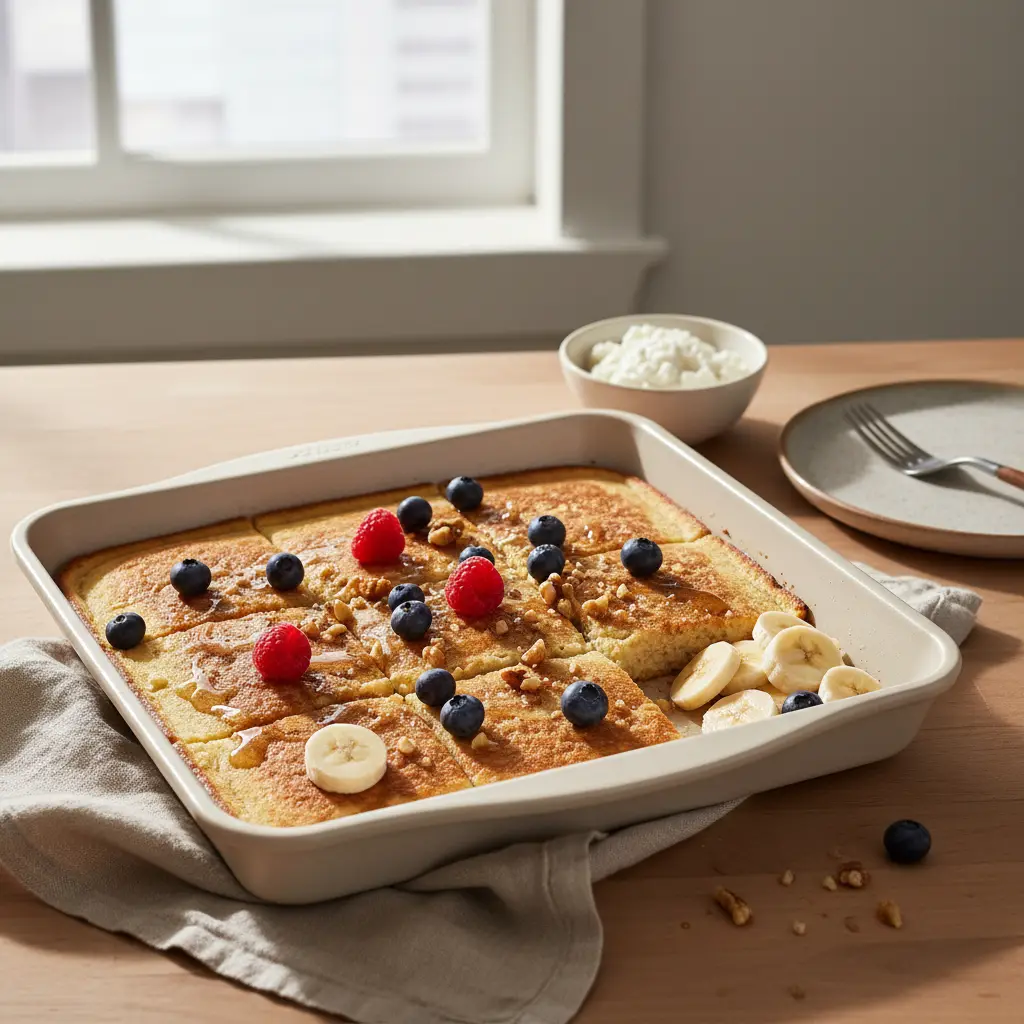
Sheet Pan Cottage Cheese Pancakes: 12-Minute Low-Carb Hack
You came for Sheet Pan Cottage Cheese Pancakes: 12-Minute Low-Carb Hack, so the recipe is right below — the notes after it are what keep it from going wrong the first time.
Preheat properly and give the pieces room — crowding steams food that should be browning. Substitutions for the two trickiest ingredients are listed below.
-
Chocolate Protein Brownies: The 12-Minute Air Fryer Method
These fudgy chocolate protein brownies deliver 15 grams of protein per serving with only 4… -
Air Fryer vs Oven Protein Cookies: 3 Tips for Perfect Texture
Choosing between an air fryer vs oven protein cookies changes everything. I have tested bo… -
Air Fryer Cottage Cheese Pancakes: 12-Minute High-Protein Bites
These air fryer cottage cheese pancakes deliver 20g of protein in a portable, grab-and-go … -
Chocolate Chip Cottage Cheese Pancakes: 20g Protein Breakfast
These chocolate chip cottage cheese pancakes deliver 20g of protein per serving in under 2…
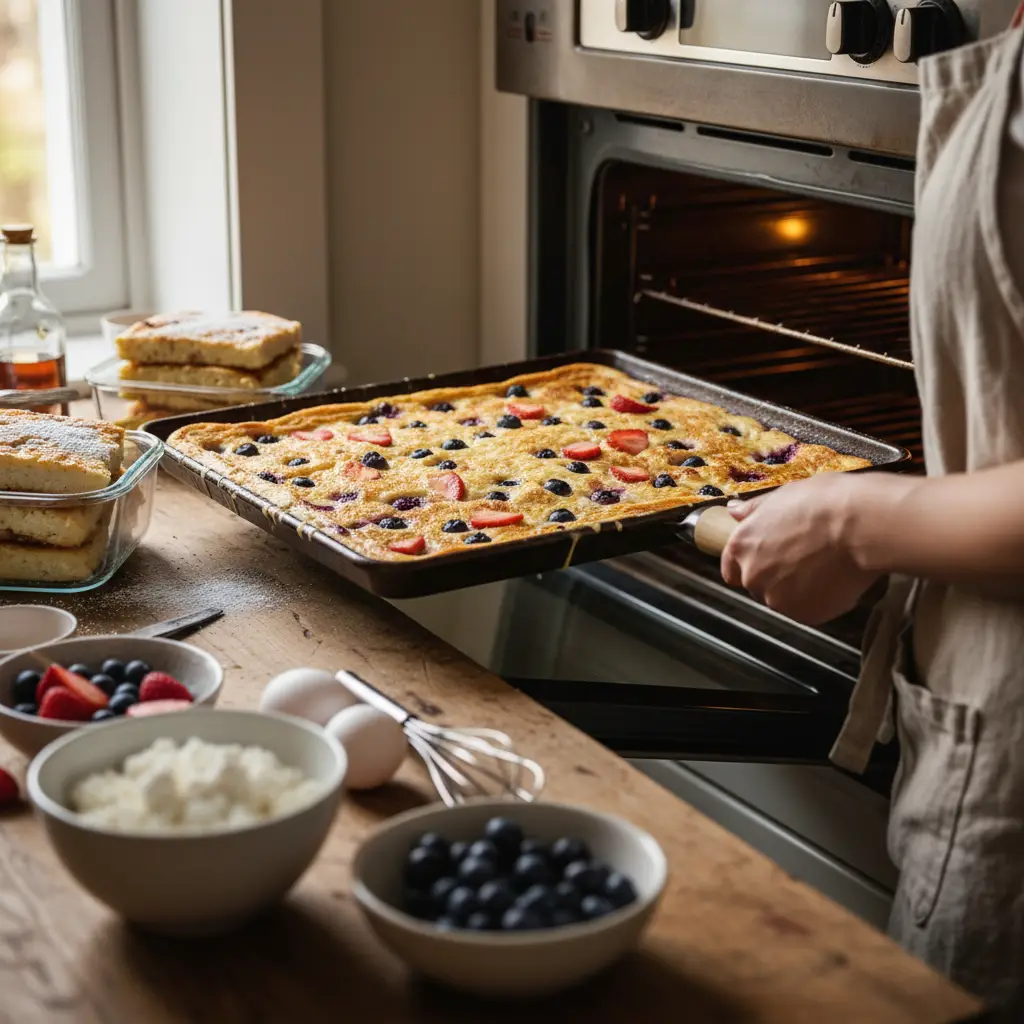
Stop flipping individual pancakes on the stove. This sheet pan cottage cheese pancakes method delivers 4 servings of high-protein breakfast in just 12 minutes of active cook time. It saves you 20 minutes of standing over a hot skillet every single Sunday.
The Blend-Spread-Bake Method: in practice
Why Cottage Cheese Wins
Cottage cheese is the secret weapon for keto meal prep. It provides a creamy, dense texture that standard flour-based pancakes simply cannot replicate.
Unlike whey protein powder, which often makes pancakes dry or rubbery, cottage cheese keeps the crumb moist for up to 5 days in the fridge.
- Contains 20g of protein per cup.
- Acts as a natural binder for low-carb flour.
- Costs roughly $2.50 per tub at most markets.
Perfecting the Sheet Pan Technique
Texture is everything when moving from a skillet to a sheet pan. You need a high-temperature oven to ensure the center cooks before the edges burn.
Always grease your parchment paper with a quick spray of avocado oil. This ensures your squares lift off cleanly without sticking.
- Preheat your oven for at least 10 minutes.
- Use a 9x13 pan for the ideal pancake thickness.
- Rotate the pan halfway through the bake time.
Storage and Reheating Tips
These pancakes are designed for meal prep. Once they cool, slice them into 8 equal rectangles and store them in an airtight glass container.
To get that fresh-off-the-griddle crunch, skip the microwave. Pop a slice into your air fryer at 350°F for 3 minutes instead.
- Lasts 5 days in the refrigerator.
- Freezes well for up to 3 months.
- Reheat in air fryer for best results.
Pros and honest limits
- Extremely high protein count
- Zero flipping required
- Perfect for weekly meal prep
- Requires a blender for texture
- Needs high-quality parchment paper
- Not as fluffy as buttermilk
Customizing Your Batter
You can easily adjust the flavor profile of this base recipe. Add cinnamon or vanilla extract to the blender for a classic breakfast taste.
If you want savory pancakes, swap the sweetener for herbs like chives or rosemary. These pair perfectly with bacon or avocado slices.
- Add 1 tsp cinnamon for sweetness.
- Fold in 1/4 cup blueberries before baking.
- Top with sugar-free syrup after reheating.
Practical comparison
| Method | Time | Effort |
|---|---|---|
| Skillet | 25 min | High |
| Sheet Pan | 12 min | Low |
| Air Fryer | 15 min | Medium |
| Toaster | 5 min | Low |
Frequently asked questions
Can I use fat-free cottage cheese?
Yes, but the texture will be slightly drier. I recommend using 2% or 4% fat cottage cheese for the best mouthfeel.
Can I substitute coconut flour?
Coconut flour absorbs 4 times more liquid than almond flour. If you swap it, use only 2 tablespoons instead of 1/2 cup.
Do these taste like cheese?
Once baked, the cottage cheese flavor disappears entirely. The result is a neutral, slightly nutty pancake that holds toppings well.
Conclusion
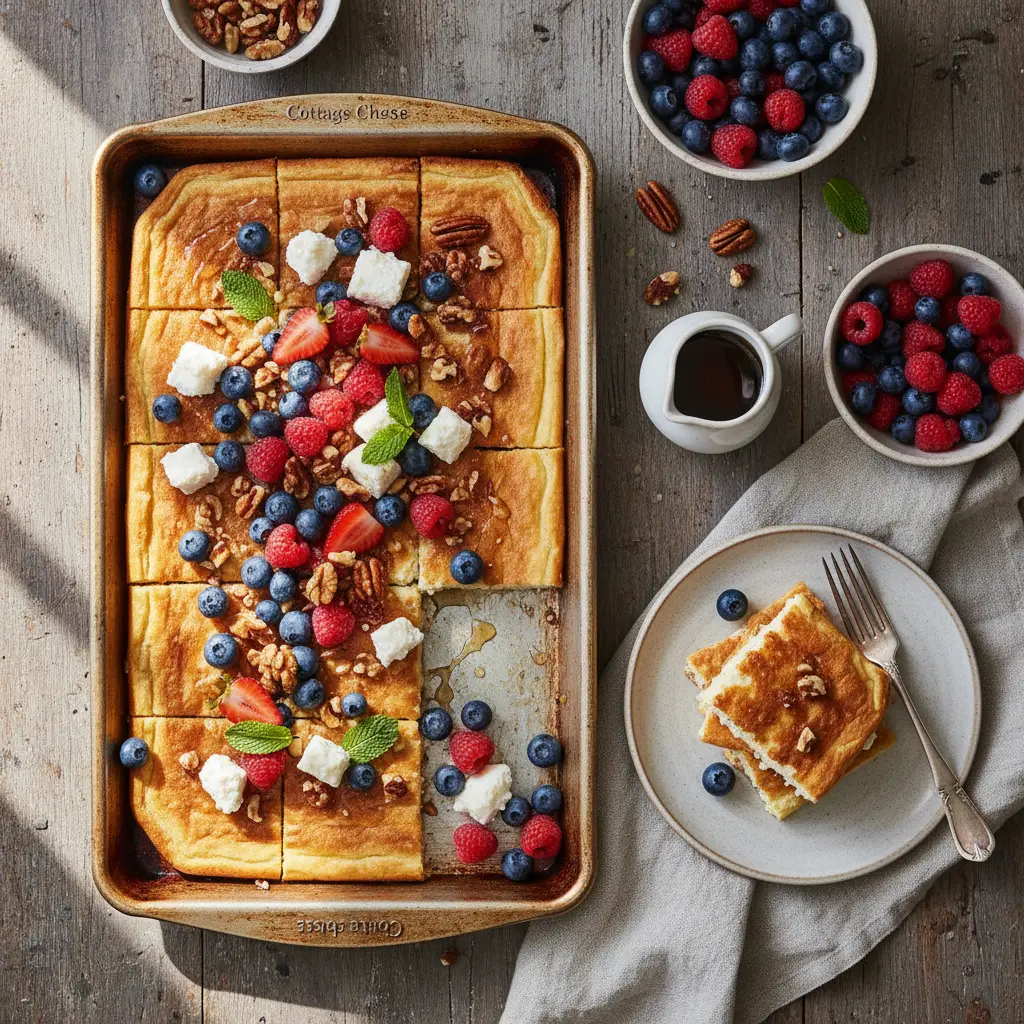
Sheet pan cottage cheese pancakes are a game changer for anyone tracking macros. By spending just 12 minutes in the kitchen today, you secure a healthy breakfast for the rest of your week. Give this method a try and simplify your morning routine.
📡 RSS
Related reading
Leia também: banana cottage cheese pancakes
Leia também: blueberry cottage cheese pancakes
Leia também: cottage cheese waffles
Read next
How to tell it is done (without opening and poking every minute)
- A clean toothpick is for cake; for a moist batter you want damp crumbs, never wet batter.
- The centre should spring back under light pressure — if it dips, give it 5–8 more minutes.
- A strong smell in the kitchen means almost done. It is the most underrated and most accurate cue.
- Home ovens run up to 35 °F off: a cheap oven thermometer fixes more problems than any recipe tweak.
- Do not open the door for the first two thirds of the bake — that temperature drop is what sinks it.
The 5 mistakes that ruin this recipe — and the fix for each
- Cold ingredients. Cold eggs and dairy curdle the batter. Twenty minutes at room temperature fixes it.
- Overmixing after the flour. It builds gluten and turns the crumb rubbery. Mix only until the flour disappears.
- Wrong pan. Batter that sits too deep bakes outside and stays raw inside. Use the conversion table below.
- Opening the oven early. That sudden temperature drop is the classic cause of a sunken centre.
- Slicing hot. The structure is still setting; 15 minutes of rest changes every slice.
Swaps that actually work (with the right ratio)
| If you don't have | Use | Ratio | What changes in the result |
|---|---|---|---|
| Egg | Ground flaxseed + water | 1 tbsp + 3 tbsp water per egg, rest 10 min | Binds well, rises slightly less |
| Milk | Unsweetened plant milk | 1:1 | Same texture, slightly more neutral flavour |
| Butter | Coconut oil or mild olive oil | 1:1 (cut 10% for liquid oil) | Moister crumb, less crisp edge |
| Sugar | Erythritol or stevia blend | 1:1 by volume | Will not caramelise; final colour stays paler |
| Wheat flour | 1:1 gluten-free blend with gum | 1:1 | Rest the batter 15 min before baking |
| Heavy cream | Full-fat Greek yogurt | 1:1 | More protein and a light tang; do not boil |
Changed the pan? Adjust the time like this
| Original pan | Equivalent | Time adjustment | Watch out for |
|---|---|---|---|
| 8" round | 8×8" square | Same time | Square corners bake faster |
| 9" round | 9×13" pan | −5 to −8 min | Thinner batter, check early |
| Loaf pan | 6 jumbo muffin cups | −15 to −20 min | Cupcakes bake far faster |
| Deep casserole | Two shallow dishes | −10 min | Spreads the heat and prevents a raw centre |
Store, freeze and reheat without wrecking the texture
| Where | How long | How to store | How to bring it back |
|---|---|---|---|
| Counter | 2 days | Airtight box, cut side down | Oven at 300 °F for 6 min |
| Fridge | 5 days | Wrap each slice in film | Microwave 15 s or oven 300 °F for 8 min |
| Freezer | 3 months | Slices separated by parchment | Thaw wrapped to keep the moisture in |
Frequently asked questions
Can I make Sheet Pan Cottage Cheese Pancakes: 12-Minute Low-Carb Hack ahead?
Yes. Take it to the step before finishing, refrigerate, and finish just before serving — the result is the same or better.
Can I double the recipe?
Yes. Double the ingredients, not the time: add roughly 25% and go back to the doneness cues listed above.
What is the real yield per serving?
Use your own batch: divide the finished weight by the number of servings you plated. Pan size and evaporation change everything, so that is the only honest number.
Does it work on any oven or stove?
Yes, but equipment varies by up to 35 °F. Judge by the doneness cues, not the clock, and note your own timing.
How well do leftovers keep?
Very well, following the storage table above. Freeze in flat portions: they thaw evenly and hold their texture.


