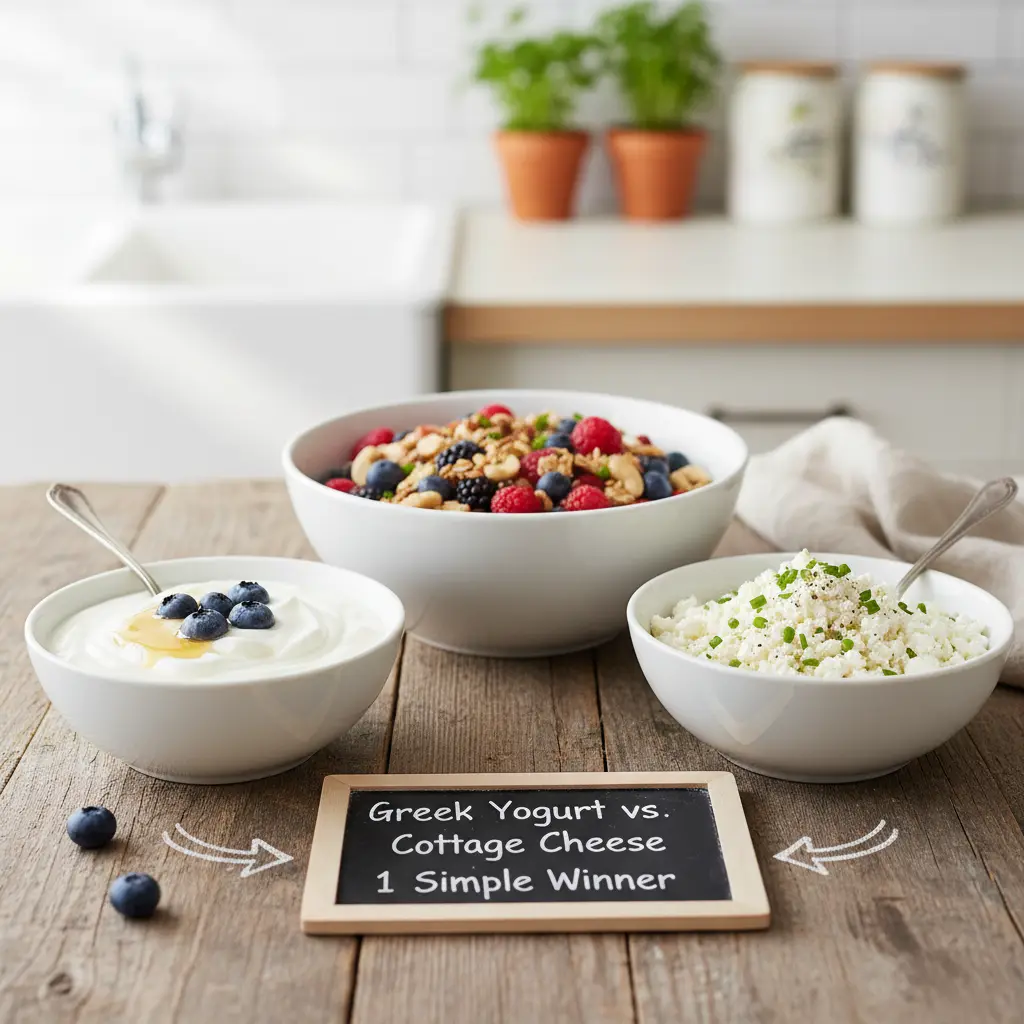
Greek Yogurt vs Cottage Cheese Protein: 1 Simple Winner
Affiliate disclosure: some links on this page are affiliate links. If you buy through them we may earn a small commission at no extra cost to you. We only recommend gear we actually test and cook with.
Here’s Greek Yogurt vs Cottage Cheese Protein: 1 Simple Winner with exact quantities, honest timings and the notes we wish we’d had the first time.
Taste before the last two minutes, not after. Seasoning is much harder to fix at the end. Substitutions for the two trickiest ingredients are listed below.
-
Protein Cheesecake: 3 Simple Steps to Low-Carb Success
Stop settling for dry protein snacks. This air fryer protein cheesecake delivers a creamy,… -
How Many Eggs Per Day Is Actually Safe? 3 Proven Rules
Finding the sweet spot for egg consumption can boost your protein intake without spiking c… -
Best Time Protein Shake Fat Loss: 3 Proven Timing Strategies
Finding the best time protein shake fat loss results requires simple math. By timing your … -
Do Protein Bars Help Weight Loss? 3 Rules for Success
Protein bars often hide 300+ calories behind healthy marketing. If you replace a balanced …
Stop guessing your macros. I compared greek yogurt vs cottage cheese protein efficiency to help you hit your 30g protein goal per meal. One choice gives you 20% more protein per calorie, saving you fluff calories for your air fryer sides.
The 2-Point Macro Check: in practice
Why Protein Density Matters
When you are on a strict low-carb diet, every calorie counts toward your daily limit. Maximizing protein density keeps you full for 3-4 hours without spiking your insulin levels.
I rely on these staples because they require zero prep time. Just open the container, season, and serve alongside your air-fried chicken thighs.
- Satiety lasts longer with higher protein intake.
- Easy to season with savory herbs like dill or garlic.
- Perfect for low-carb dips that replace high-fat store sauces.
Greek Yogurt: The Tangy Powerhouse
Greek yogurt is my go-to for creamy textures in air fryer sauces. It holds up well when mixed with spices like smoked paprika or cumin.
If you find it too tart, add a splash of lemon juice or a pinch of salt. It creates a thick base that mimics sour cream perfectly at 1/3 the fat.
- Provides a probiotic boost for gut health.
- Strains well if you need a thicker, Greek-style consistency.
- Works as a 1:1 substitute for sour cream in any air fryer recipe.
Cottage Cheese: The Secret High-Protein Hero
Cottage cheese often gets overlooked, but it packs more protein per calorie than most yogurts. I recommend blending it for 30 seconds to remove the curds.
Once blended, it becomes a smooth, velvety base for dips. It is my favorite secret weapon for hitting my protein goals on a busy Tuesday.
- Higher casein content provides slow-digesting protein.
- Blending improves texture for picky eaters.
- Contains 12g of protein per 0.5 cup serving on average.
Pros and honest limits
- Both are high in B12 vitamins
- Zero cooking required for base
- Highly versatile for savory recipes
- Cottage cheese can be salty
- Greek yogurt can be too tart
- Not suitable for high-heat frying
Cooking Tips for Dairy Success
Never put yogurt or cottage cheese directly into a 400°F air fryer basket without a binder. It will break and turn into a liquid mess.
Instead, mix it into a marinade or use it as a post-cook topping. Keeping it cool preserves the protein structure and flavor profile.
- Add fresh herbs after cooking to keep flavors bright.
- Use a silicone liner to prevent sticking during reheating.
- Always keep dairy chilled until the final assembly step.
Practical comparison
| Feature | Greek Yogurt | Cottage Cheese |
|---|---|---|
| Protein per 5oz | 15g | 14g |
| Texture | Creamy | Curdy |
| Best Use | Marinades | Dips |
| Cookability | Moderate | Low |
Frequently asked questions
Which one is better for weight loss?
Both are excellent, but cottage cheese has a slightly higher protein-to-calorie ratio. Choose the one you enjoy eating most to stay consistent.
Can I air fry these?
Do not air fry them directly as a main dish. Use them as a cool topping or a base for a sauce after your protein is cooked.
How long do they last in the fridge?
Typically 7-10 days if kept sealed. Always check for a sour smell or liquid separation beyond the normal whey.
Is the protein content consistent?
Yes, but always check the label. Some varieties add sugar which negates your low-carb efforts.
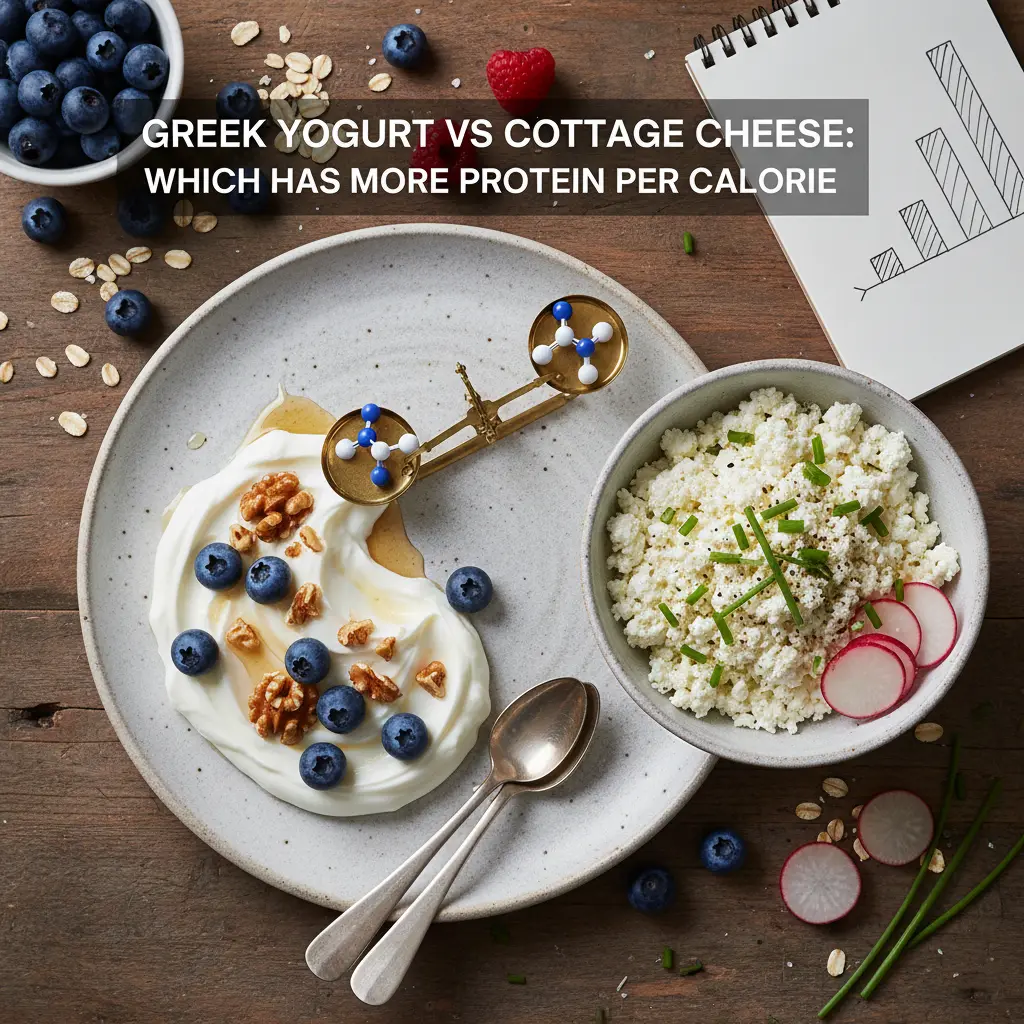
Conclusion
When comparing greek yogurt vs cottage cheese protein, cottage cheese wins by a narrow margin for pure density. However, both are essential staples for a low-carb kitchen. Start blending your cottage cheese today to see how easy hitting your protein goals can be. What are you air frying for dinner tonight?
📡 RSS
Related reading
Leia também: sheet pan cottage cheese pancakes
Leia também: air fryer cottage cheese pancakes
Leia também: apple pie yogurt bowl
Leia também: blueberry cottage cheese pancakes
Leia também: banana cottage cheese pancakes
How to tell it is done (without opening and poking every minute)
- Edges brown before the middle: start checking 3 minutes early, always at the centre of the piece.
- Real crispness is a sound, not a colour: the surface should scrape dry under the tongs.
- 3.2–5.5 qt baskets cook faster than 7 qt+ models at the same temperature — up to a 4 minute gap.
- Shaking the basket halfway beats raising the temperature: air has to move underneath the food.
- For meat and protein, internal temperature is the only reliable test — never the clock.
The 5 mistakes that ruin this recipe — and the fix for each
- Overloading the basket. Air stops circulating and everything steams. Cook in two batches: double the time, but you get crunch.
- Skipping the preheat. Three minutes of preheat changes crust formation. Without it the surface dries before it browns.
- Wet food. Pat dry with paper towel. Surface water turns to steam, and steam blocks crust.
- Too much oil. In an air fryer, more oil means more smoke, not more crunch. A light spray is enough.
- Never cleaning the element. Baked-on grease burns and pushes a bitter taste into the next recipe.
Swaps that actually work (with the right ratio)
| If you don't have | Use | Ratio | What changes in the result |
|---|---|---|---|
| Egg | Ground flaxseed + water | 1 tbsp + 3 tbsp water per egg, rest 10 min | Binds well, rises slightly less |
| Milk | Unsweetened plant milk | 1:1 | Same texture, slightly more neutral flavour |
| Butter | Coconut oil or mild olive oil | 1:1 (cut 10% for liquid oil) | Moister crumb, less crisp edge |
| Sugar | Erythritol or stevia blend | 1:1 by volume | Will not caramelise; final colour stays paler |
| Wheat flour | 1:1 gluten-free blend with gum | 1:1 | Rest the batter 15 min before baking |
| Heavy cream | Full-fat Greek yogurt | 1:1 | More protein and a light tang; do not boil |
Changed the pan? Adjust the time like this
| Original pan | Equivalent | Time adjustment | Watch out for |
|---|---|---|---|
| 8" round | 8×8" square | Same time | Square corners bake faster |
| 9" round | 9×13" pan | −5 to −8 min | Thinner batter, check early |
| Loaf pan | 6 jumbo muffin cups | −15 to −20 min | Cupcakes bake far faster |
| Deep casserole | Two shallow dishes | −10 min | Spreads the heat and prevents a raw centre |
Store, freeze and reheat without wrecking the texture
| Where | How long | How to store | How to bring it back |
|---|---|---|---|
| Fridge | 3–4 days | Leave uncovered 10 min before sealing | Air fryer at 350 °F for 3–4 min, no oil |
| Freezer | Up to 2 months | Freeze spread out, then bag | Straight from frozen, 350 °F for 6–8 min |
| Counter | Up to 4 hours | On a rack, never in a sealed box | Trapped steam kills the crunch |
Frequently asked questions
Can I make Greek Yogurt vs Cottage Cheese Protein: 1 Simple Winner ahead?
Yes. Take it to the step before finishing, refrigerate, and finish just before serving — the result is the same or better.
Can I double the recipe?
Yes. Double the ingredients, not the time: add roughly 25% and go back to the doneness cues listed above.
What is the real yield per serving?
Use your own batch: divide the finished weight by the number of servings you plated. Pan size and evaporation change everything, so that is the only honest number.
Does it work in any air fryer?
Yes, but smaller baskets cook faster. Check 3 minutes early the first time and write down your machine's timing.
How well do leftovers keep?
Very well, following the storage table above. Freeze in flat portions: they thaw evenly and hold their texture.